AI (Artificial Intelligence) Hub
Struggling to keep up with AI? So is everyone, even the experts
AI has moved faster in 2026 than most of us can follow, and many of us feel we are falling behind.
Earlier this month, OpenAI released GPT-6 Astra, which it describes as its most capable model so far. Within a week, the conversation had already moved on to what it means, what it beats, and what might come next. If you felt a flicker of ‘I have not even caught up with the last one’, you are not the only one.
I said as much in our AI Working Group at DSC last week. This past year has felt different. AI is not just improving, it is improving faster than it was, and for a lot of us it has become hard to keep up, or even to test what is new and work out whether it is worth our time. Plenty of people I speak to in the sector feel the same: a low hum of being permanently one step behind.
The feeling is not just in your head
It is tempting to put that down to your own capacity, or your charity’s, but there is data behind the feeling.
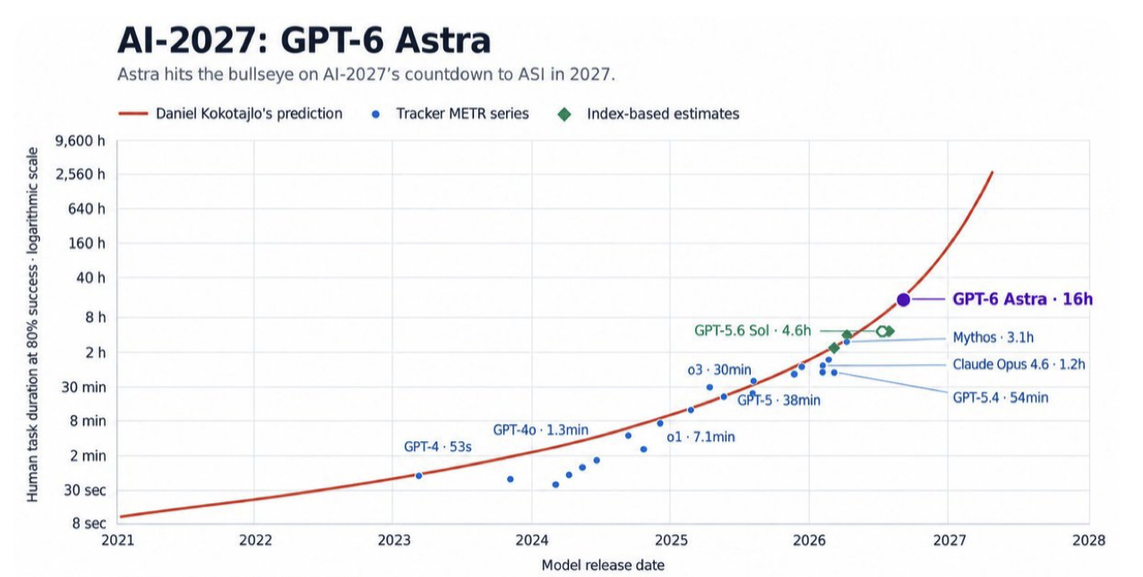
METR, a research group that measures AI progress, tracks something useful: the length of a task a model can complete on its own, measured by how long the same task takes a person. For years, that length has been doubling roughly every seven months. But now, more recent data suggests it has sped up, with some estimates closer to every four months (a slightly dizzying thought, if you let it be).
So when this year feels faster than last year, that is not your imagination. As far as anyone can measure, it actually is faster.
That said, I want to be honest and not swap one kind of hype for another. These are benchmarks, and they only tell us so much. And the researchers themselves are clear that drawing the line far into the future is not reliable, so when you see charts predicting a countdown to some world-changing moment in 2027, treat those as one view, not a fact. But what we can say is simpler: this past year has been fast.
Even the people building it feel it
Here is the part that changed how I think about this.
In that same AI Working Group meeting, one of our volunteers, Simon Wickes, who works at Cisco, said something simple: ‘You are not alone on this one’. He was describing his own team, people working close to the frontier of this technology, who feel exactly the same sense that it is moving faster than anyone can comfortably track.
That reframed it for me. If the people building and deploying this at a global tech company feel they are struggling to keep up, then the feeling is not a sign that you (or me), in a small charity with a fraction of the time and resources, are doing something wrong. The pace is the problem, not you.
Keeping up with everything was never the point
Once you accept that nobody is on top of all of it, a weight lifts, and a better question appears. Not ‘how do I keep up with every new model’, but ‘what is the one job I actually need this to help with’.
You don’t need to have tried Astra, or Fable 5, or the fifteen tools an influencer swears you are behind for not using. Maturity with AI is not being up to date, it is being deliberate. It means choosing a real task, picking a tool that does it well enough, learning that tool properly, and leaving the rest of the noise to one side until you have a real reason to look.
For a smaller charity, this is simply the sensible approach. Chasing the newest thing is a luxury of time and money that most of the sector does not have, and does not need. A team that understands one tool well, and uses it with judgement, is in a far stronger position than one that has skimmed ten and mastered none.
What do you actually do
Nothing dramatic. Pick the task in front of you that eats the most time. Find something that helps with that (and only that), for now. Get comfortable with it, notice where it helps and where it gets things wrong (it will), and build your understanding one real problem at a time.
Remember that the goal was never to outrun the technology. You can’t, and neither can anyone else. The goal is to not let the pace paralyse you, and to keep making steady, sensible decisions while the noise carries on around you.
And on the days it feels like too much, it is worth remembering Simon’s line: You are not alone on this one. None of us are.
Want to build that understanding?
This is exactly the thinking behind our AI training at DSC. Rather than chasing every release, our courses are built to help charity teams understand these tools and use them with judgement, from first steps to more advanced workflows.
You can see what is coming up, and find something that fits where you actually are. For all our upcoming AI courses, click here now.